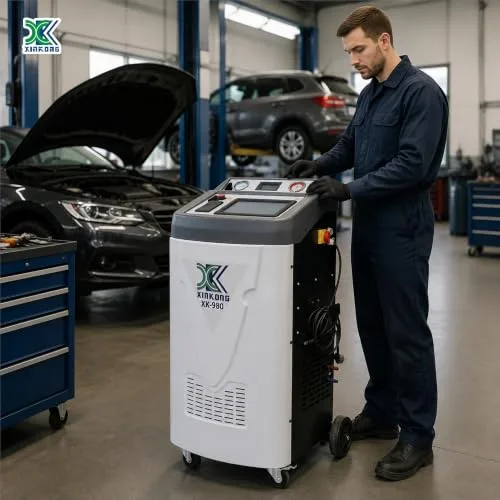
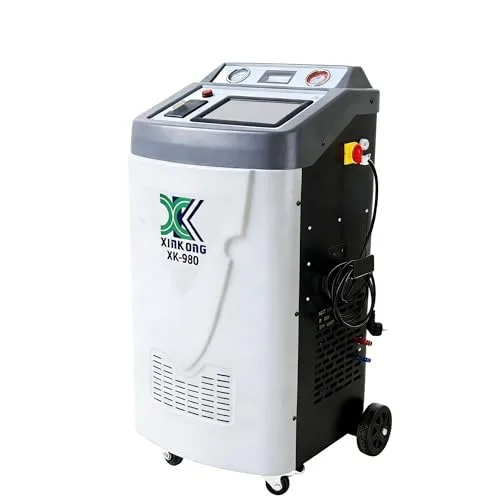
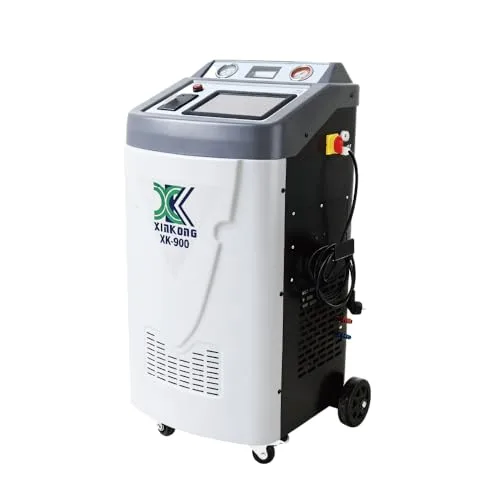
Two XK machines cover both refrigerant standards on the road today — the AC980 for 1234YF systems and the AC900 for R-134A systems. Both run the same one-touch automatic cycle from a 10.1" touchscreen, with an independent oil module, built-in printer and service database.
XK builds fully automatic A/C service stations for repair shops that need to recover, recycle and recharge refrigerant without tying up a technician on manual valve work. The AC980 and AC900 share the same core machine — a 10.1" touchscreen control, an independent oil module that keeps PAG and UV oil on separate pipelines, a built-in dryer and filter that clean refrigerant during recovery, and a built-in printer and SD database for service records — split only by which refrigerant standard each is calibrated for. That split matters: 1234YF and R-134A systems aren't interchangeable, so picking the machine that matches the vehicles actually coming through your bay is the first decision, not an afterthought.
Built for Shop Throughput
Feature highlights pulled directly from XK's own machine specifications.
01
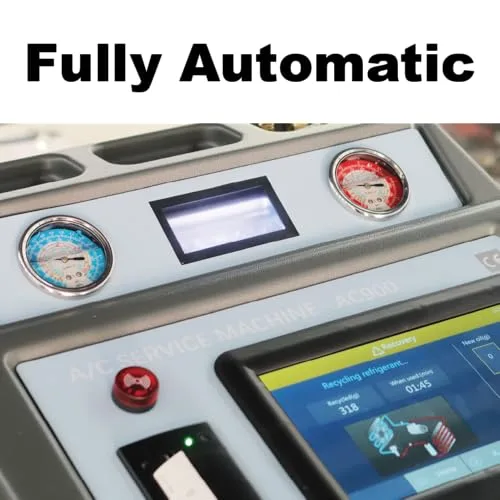
Fully Automatic Cycle
Recovery, vacuum test and recharge run from the 10.1" touchscreen in sequence — no manually opening and closing valves between steps.
02
≥96% Recovery Efficiency
XK's separation and regeneration technology deep-cleans reclaimed refrigerant so it comes back out filtered, with no impurities left behind.
03
Independent Oil Module
PAG and UV oil run on their own separate pipelines and solenoid valves, so the two never mix or contaminate each other during service.
04
Built-In Printer & Database
Every service cycle logs to the built-in SD database, with one-click printed reports for shop records and customer paperwork.
05
High-Tech Thermal Cycling
A heating stage speeds up recovery instead of leaving it dependent on ambient shop temperature.
06
Self-Check Pro Diagnostics
The machine runs its own vacuum and leak self-test before a service cycle, catching a bad hose connection before it wastes refrigerant.
Choose by Refrigerant Type
Two machines, one shared design — the only real difference is which refrigerant standard each is built to service.
For 1234YF Systems — Fuel, Hybrid & New Energy Vehicles
The AC980 is XK's fully automatic service station for 1234YF A/C systems, covering standard fuel vehicles, hybrids and new-energy (EV) platforms in one machine. A 10.1" touchscreen walks a technician through system flush, refrigerant recovery, vacuum testing and recharge without manually juggling valves, while an independent oil module keeps PAG and UV oil on their own pipelines and solenoid valves so the two never cross-contaminate. A built-in dryer and filter clean the refrigerant during recovery, and the whole cycle logs to a built-in SD database with one-click printed service reports for shop record-keeping.
For R-134A Systems — Fuel & Early-Model Hybrid Vehicles
The AC900 runs the same fully automatic recovery, vacuum and recharge cycle as the AC980, built instead for R-134A systems found on standard fuel vehicles and earlier-model hybrids. It shares the 10.1" touchscreen control, independent oil module, built-in dryer/filter and printer/database logging of the AC980 — the difference between the two machines is strictly which refrigerant they're plumbed and calibrated for, not the feature set. Pick this model if the vehicles coming through your bay are still running R-134A rather than the newer 1234YF standard.
A closer look at the control panel and build shared across the AC980 and AC900.
One-Touch Fully Automatic Cycle
Two analog gauges flank a 10.1" touchscreen that drives the entire recovery-vacuum-recharge sequence — select the service, connect the hoses, and the machine runs the cycle instead of a technician switching valves by hand.
Built-In Printer, Oil Module & Ventilated Cooling
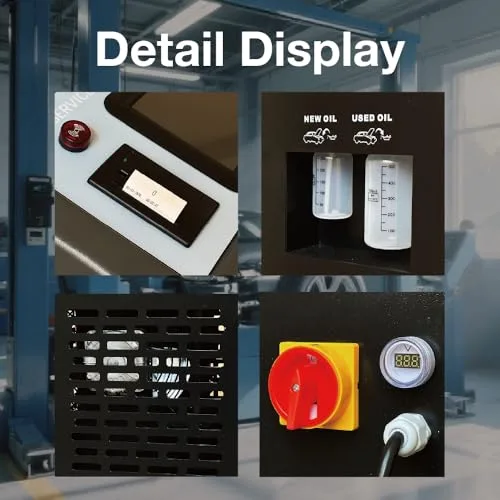
A built-in thermal printer logs each service for shop records, dedicated new/used oil cylinders keep the independent oil module's fill levels visible at a glance, and a ventilated rear grille plus a clearly marked power isolator round out the cabinet.
10.1" Smart Touch Screen Control
Every function — system flush, recovery, vacuum test, recharge — sits behind a single icon-driven touchscreen menu, built to be readable and operable with a gloved hand in a working bay.
Frequently Asked Questions
Only the refrigerant they're plumbed and calibrated for. The AC980 services 1234YF systems (most fuel, hybrid and new-energy vehicles from roughly the last decade); the AC900 services R-134A systems (older fuel vehicles and early-model hybrids). The touchscreen, recovery/vacuum/recharge cycle, independent oil module, printer and database are identical between the two — check your vehicle's A/C system label for which refrigerant it actually uses before choosing.
Check the A/C system label under the hood (usually near the compressor or on the radiator support) — it states the refrigerant type directly. As a rough guide, most vehicles built from the mid-2010s onward use 1234YF, while older vehicles use R-134A, but the label is the only reliable source since this varies by manufacturer and model year.
It's automatic in that recovery, vacuum testing and recharge run as a programmed sequence once started from the 10.1" touchscreen, rather than a technician manually operating separate gauges and valves for each stage. A technician still selects the service and monitors the cycle on-screen.
Both models run on 110V AC, 60Hz — a standard single-phase outlet, the kind already found in most US repair bays. No three-phase power or special wiring is required.
It gives PAG oil (used in most R-134A and 1234YF systems) and UV dye oil (used to trace leaks) their own separate pipelines and solenoid valves inside the machine. Without that separation, oil types can cross-contaminate between services — this module keeps that from happening job to job.
The AC980 (1234YF) is listed as compatible with fuel, hybrid and new-energy vehicles; the AC900 (R-134A) covers fuel vehicles and early-model hybrids. Electric-drive A/C compressors on some hybrid/EV platforms use specialized non-conductive oil — confirm your specific vehicle's oil requirement before running a service, since using the wrong oil type in an electric compressor system can damage it.
Each unit ships as a complete standalone service station — the recovery/recharge machine itself with its built-in tank, hoses, gauges, printer and touchscreen. It arrives ready to connect to a vehicle's A/C service ports; no separate vacuum pump or manifold gauge set is needed.
XK lists the electronic refrigerant scale accuracy at about ±0.35 oz (10 g), with a pressure sensor precision of about ±0.1 bar and vacuum transducer accuracy under 0.8% — precise enough to track refrigerant charge weight per manufacturer spec sheets.
The built-in tank holds about 0.42 cubic feet (12 L), with a maximum refrigerant load rating of 66 lbs (30 kg) before it needs to be emptied — enough capacity for a full day of typical shop service work between empties.
Amazon's standard 30-day return window applies to both listings. Beyond that, XK is listed as a small-business brand on Amazon — for setup questions or a hardware issue, contact the seller directly through your Amazon order page rather than a separate manufacturer hotline.